
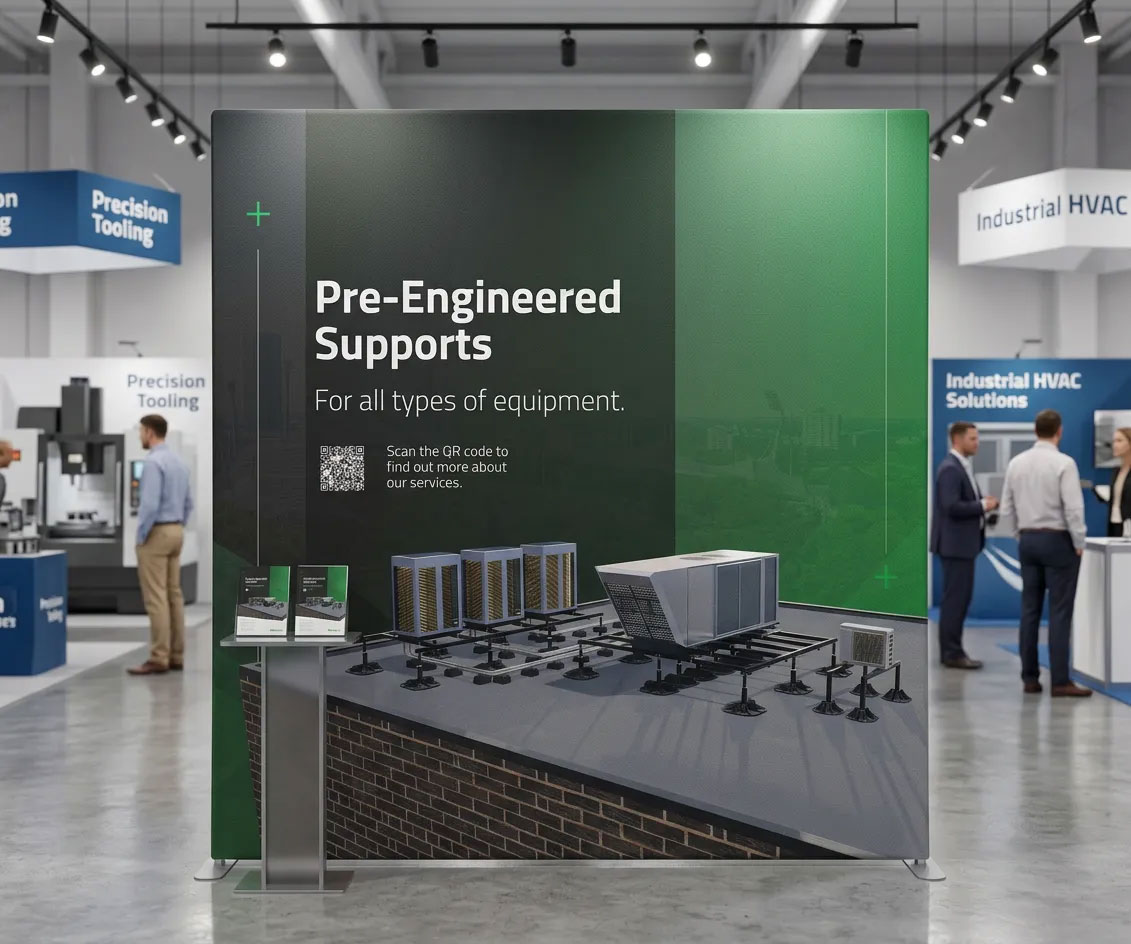
For many Canadian manufacturers, trade shows are still one of the most powerful ways to generate leads, build relationships, and grow market share.
But showing up isn’t enough.
Across Canada, trade shows and industry events continue to grow in both attendance and ROI, with many businesses reporting strong returns and increased lead generation from in-person events.
At the same time, competition on the show floor has never been higher.
The difference between companies that succeed—and those that don’t—comes down to one thing:
How well they prepare, present, and follow up.
Why Trade Shows Still Matter in Canada
Despite the rise of digital marketing, trade shows remain a core strategy for B2B and industrial companies.
They allow you to:
Connect directly with decision-makers
Demonstrate products in real time
Build trust faster than online channels
Generate high-quality leads in a short timeframe
In fact, many Canadian businesses report that trade shows reduce cost per lead compared to traditional marketing channels while delivering stronger relationships and long-term opportunities.
For manufacturers—especially in sectors like steel, construction, and fabrication—this kind of face-to-face interaction is critical.
Where Most Manufacturing Companies Fall Short
Even though companies invest thousands into trade shows, many struggle to see meaningful results.
Common issues include:
Generic or outdated booth design
Unclear messaging and positioning
Weak or overly technical sales materials
No pre-event promotion strategy
Poor follow-up after the event
The result?
Low engagement, missed opportunities, and wasted investment.
Successful companies treat trade shows as a complete marketing system, not just a one-time event. Here’s how that breaks down
Lorem ipsum dolor sit amet, consectetur adipiscing elit. Ut elit tellus, luctus nec ullamcorper mattis, pulvinar dapibus leo.
Strong Event Branding & Visual Direction
High-performing companies show up with a clear, consistent identity.
Their booth, signage, and materials all work together to:
Communicate what they do instantly
Build credibility
Stand out in a crowded space
This is especially important in industrial environments, where many brands look and sound the same.
High-Impact Booth Design & Graphics
Your booth has seconds to capture attention.
Effective trade show booth design for manufacturers focuses on:
Clear messaging (not clutter)
Strong visual hierarchy
Easy-to-understand value propositions
The goal isn’t just to look good—it’s to start conversations.
Sales Materials That Actually Support Conversations
Most brochures and spec sheets are too technical or poorly structured.
Instead, strong industrial sales collateral should:
Guide the conversation
Highlight key differentiators
Be easy to scan and understand
When done right, your materials become a tool—not just a takeaway.
Pre-Event Marketing That Drives Booth Traffic
Top-performing companies don’t wait for people to “find them.”
They actively promote their presence using:
Email campaigns
Social media content
Landing pages for event sign-ups
This ensures you’re not relying on foot traffic alone.
On-Site Digital Content That Engages
Screens, presentations, and visuals play a huge role in keeping people engaged.
Whether it’s:
Product demonstrations
Looping visuals
Case study highlights
The goal is to hold attention long enough to start a meaningful conversation.
Post-Event Follow-Up That Converts Leads
This is where most companies lose momentum.
Trade shows are just the beginning.
Effective follow-up includes:
Structured email sequences
Branded materials
Ongoing lead nurturing
Many deals in manufacturing take months to close—consistent follow-up is what turns initial interest into revenue.
The Real Opportunity for Canadian Companies
Canada’s manufacturing sector continues to play a major role in the economy, with industries like metals, construction, and industrial production driving growth and exports.
At the same time, trade shows and B2B events remain a key driver of:
Business development
Industry connections
Export opportunities
Many of the most valuable partnerships and contracts still begin with a simple conversation at an event.
Turning Trade Shows Into a Growth Channel
If you’re investing in trade shows, the goal shouldn’t just be visibility.
It should be:
More qualified leads
Better conversations
Stronger brand positioning
Higher conversion after the event
That only happens when your branding, materials, and strategy are aligned.
Final Thoughts
Trade shows are not going away—especially in the Canadian manufacturing and industrial sectors.
But the companies that win are the ones that treat them as a strategic system, not just a booth and a banner.
If your current approach isn’t generating the results you want, it’s not the event—it’s how you’re showing up.